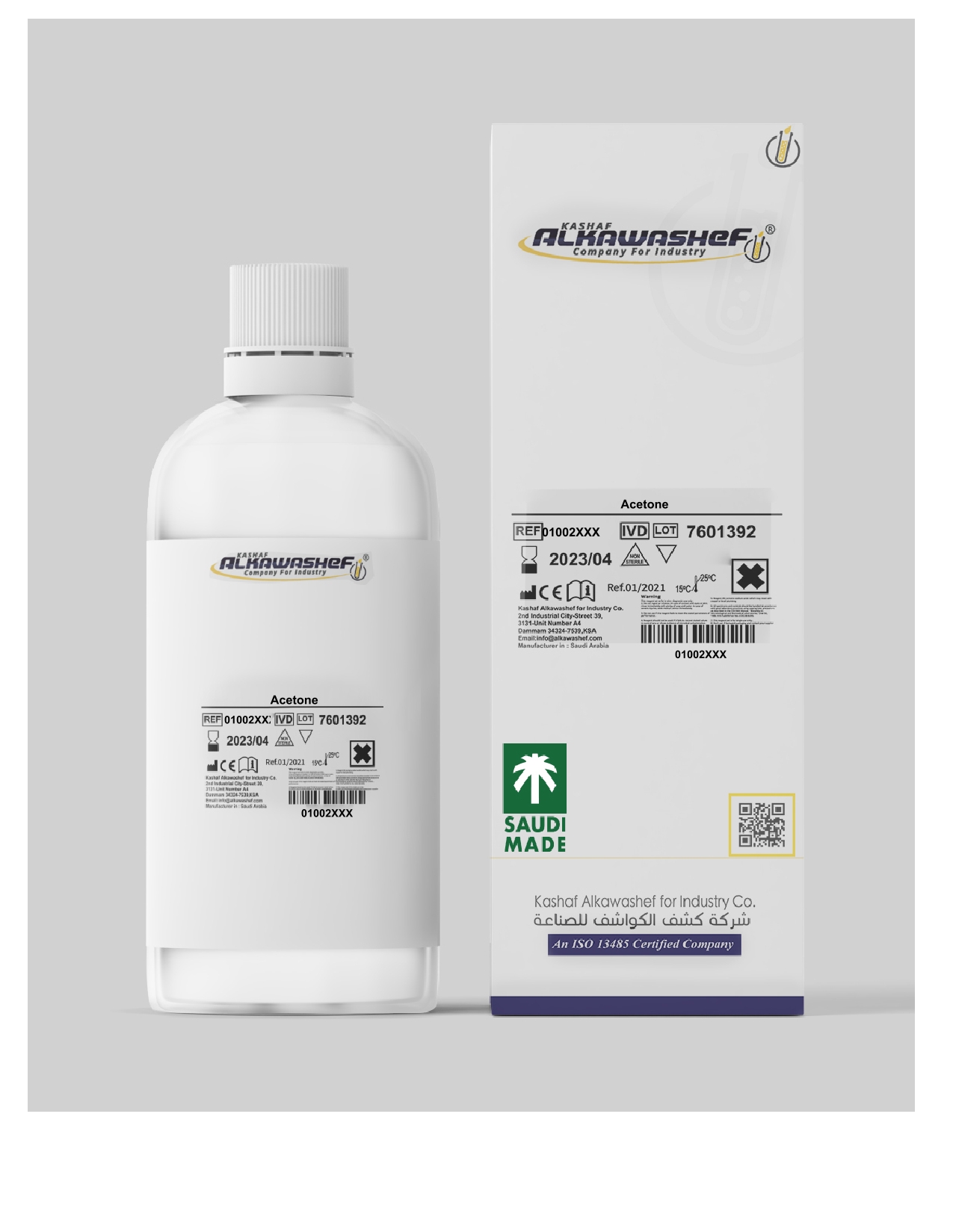
Acetone - Professional Laboratory Solvent Applications
Acetone stands as the premier laboratory solvent for applications demanding rapid evaporation and complete residue removal, serving clinical, research, and industrial laboratories universally.In histology laboratories, acetone functions as the final dehydrant in tissue processing protocols. Following graded ethanol dehydration series, acetone completely removes residual water from tissue sections, preparing specimens for optimal paraffin infiltration and embedding. This critical dehydration step ensures uniform sectioning and superior staining quality in diagnostic pathology.Cytology laboratories employ acetone for immediate fixation of air-dried smears including fine needle aspirations, bone marrow preparations, and body fluid sediments. The solvent rapidly penetrates cells, preserving cellular morphology and facilitating subsequent Romanowsky-type staining procedures essential for accurate cytological interpretation.Clinical chemistry laboratories utilize acetone for cleaning precision pipettes, cuvettes, and spectrophotometric cells. The solvent effectively removes protein films, lipids, and dye residues that accumulate during routine biochemical testing, restoring instrument performance without leaving interfering residues.In molecular biology workflows, acetone supports nucleic acid precipitation protocols and serves as a final wash solvent in plasmid purification procedures. Its miscibility with aqueous solutions enables efficient removal of salts and contaminants while preserving biomolecular integrity.Chromatography laboratories depend on high-purity acetone for mobile phase preparation, sample reconstitution, and instrument maintenance. The solvent's UV transparency and low fluorescence background prove essential for HPLC and GC applications requiring baseline stability and detector sensitivity.Laboratory managers select acetone for its multiple container sizes accommodating diverse workflow demands. Smaller volumes suit research applications while larger containers support high-throughput clinical environments. Bulk packaging reduces procurement frequency and storage requirements without compromising solvent quality.Safety protocols mandate acetone storage in flammables cabinets with secondary containment. Vapor suppression systems and explosion-proof equipment protect personnel and facilities. Spill response procedures including absorbent materials and ventilation activation maintain laboratory safety standards.Manufactured under ISO 13485 quality systems with SFDA compliance, this acetone delivers consistent performance across analytical applications. Each production lot undergoes rigorous purity testing ensuring suitability for the most demanding laboratory procedures.