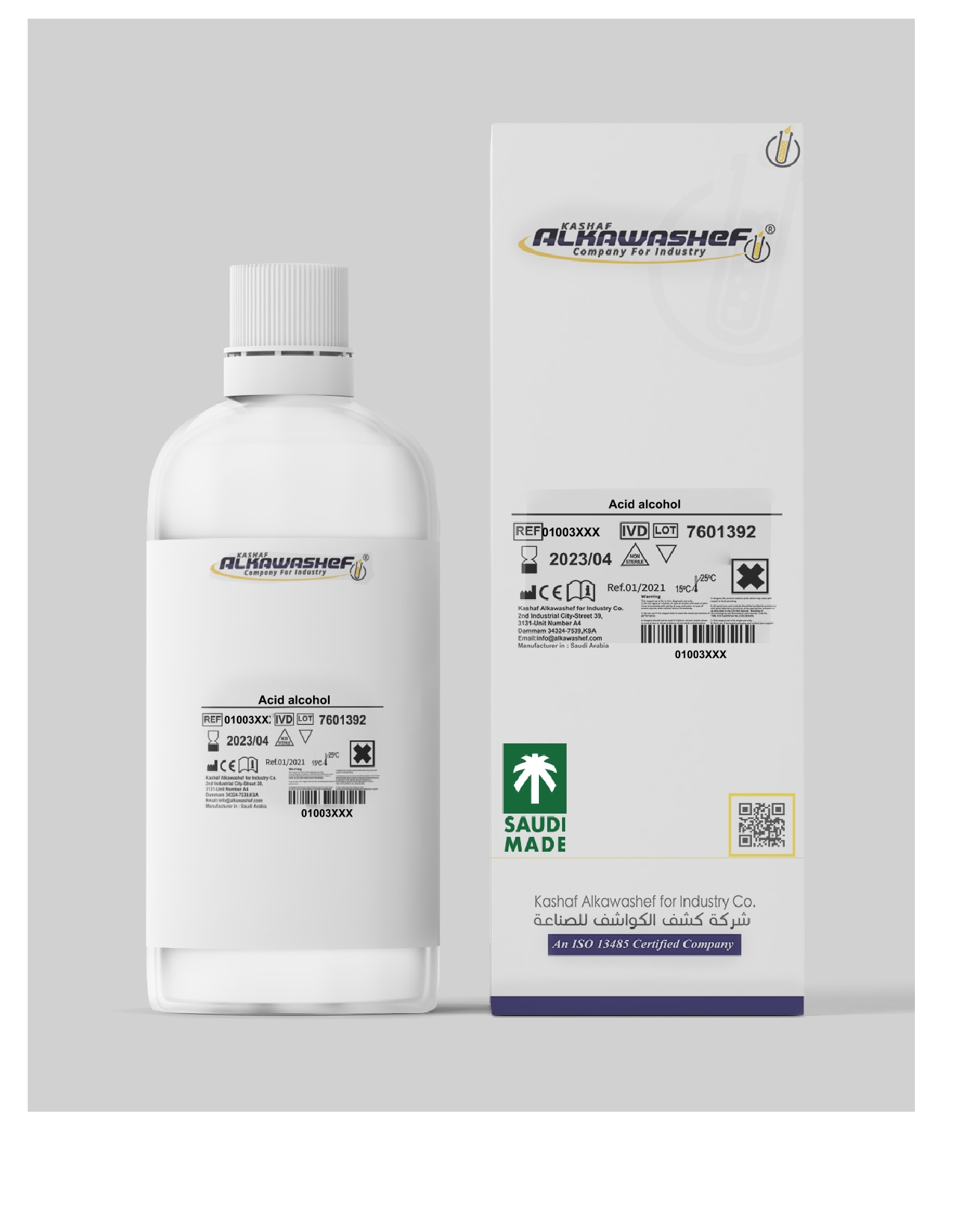
Acid Alcohol - Histopathology Staining Applications
Acid alcohol represents the gold standard differentiating solution for hematoxylin-based staining protocols across histology laboratories worldwide, ensuring optimal nuclear contrast and cytoplasmic clarity.In routine H&E staining procedures, acid alcohol selectively removes excess hematoxylin from tissue cytoplasm while preserving intense nuclear staining. This precise differentiation step reveals architectural detail and cellular morphology essential for accurate pathological diagnosis. Timing and application technique directly influence final stain quality.Special histochemistry protocols including PAS, Alcian Blue, and Mucicarmine procedures incorporate acid alcohol differentiation to enhance specific tissue component visualization. The solution's controlled acidity prevents over-differentiation that compromises target structure identification while eliminating non-specific background staining.Immunohistochemistry laboratories employ acid alcohol in antigen retrieval protocols and post-staining differentiation steps. The reagent balances chromogen development with background reduction, optimizing signal-to-noise ratios critical for antibody specificity interpretation.Cytology laboratories utilize acid alcohol for Papanicolaou stain differentiation and Romanowsky-type procedures. The solution provides consistent decolorization across cell populations while preserving diagnostic features including nuclear-cytoplasmic ratios and chromatin patterns essential for cytological classification.Research histology applications benefit from acid alcohol's reproducibility across experimental protocols. Whether investigating novel stains, fluorescent conjugates, or enzyme histochemistry, researchers depend on standardized differentiation ensuring comparable results across treatment groups and time points.Laboratory protocols specify exact differentiation times, agitation techniques, and rinse sequences optimizing acid alcohol performance. Validation studies confirm solution consistency across container sizes and production lots, supporting method accreditation requirements.Safety considerations include acid-resistant storage containers, secondary containment systems, and appropriate personal protective equipment. Fume hood usage during bulk applications prevents vapor exposure while maintaining staining precision under controlled environmental conditions.Produced under ISO 13485 quality management with SFDA regulatory oversight, acid alcohol solutions undergo stringent composition analysis ensuring batch-to-batch consistency. Multiple volume options accommodate diverse laboratory scales from research to high-volume service environments.