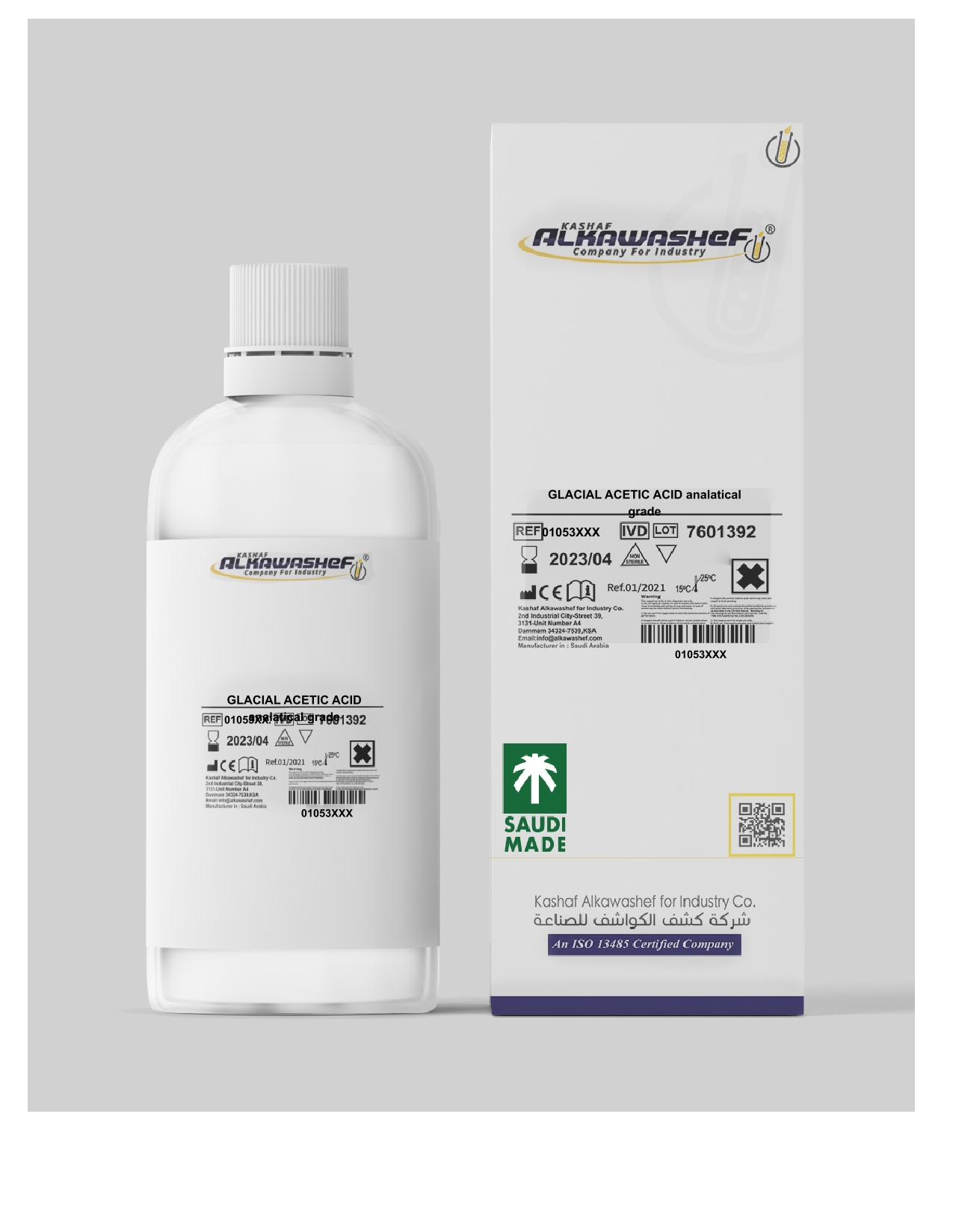
Analytical Grade Glacial Acetic Acid - Trace Analysis
Analytical grade glacial acetic acid (trace metals <0.1 ppm) supports instrumental techniques requiring ultra-high purity solvents across research laboratories.HPLC laboratories utilize AR glacial acetic acid as mobile phase modifier achieving baseline stability through 200nm. Sub-ppm metal content prevents column deterioration while UV cutoff (230nm) supports low wavelength detection.ICP-MS laboratories employ glacial acetic acid matrix matching clinical samples preventing ionization interference. Low polyatomic spectral overlaps ensure accurate trace element quantitation across biological matrices.NMR spectroscopy laboratories select analytical grade glacial acetic acid providing sharp singlet peaks without water suppression requirements. Anhydrous purity eliminates hydrogen exchange broadening compromising resolution.Pharmaceutical R&D laboratories qualify AR glacial acetic acid through ICH Q3A specifications. Organic impurity profiling (GC-MS) and heavy metals (ICP-MS) confirm suitability for early phase clinical trial materials.Quality control certificates document assay (≥99.9%), residue on evaporation (<0.0005%), and titratable acid specifications. Lot analysis traceability supports method validation documentation requirements.Amber distillation prevents photodegradation while Teflon-lined closures eliminate extractables. Molecular sieve pretreatment removes residual water preventing hydrolysis during chromatographic applications.Safety protocols emphasize extreme corrosivity requiring face shields and double gloves. Spill neutralization with sodium bicarbonate prevents infrastructure damage while vapor monitoring protects personnel.ISO 13485 manufacturing includes fractional distillation, metals analysis (GF-AAS), and UV spectroscopy verification. Multi-compendial compliance supports global laboratory accreditation requirements.