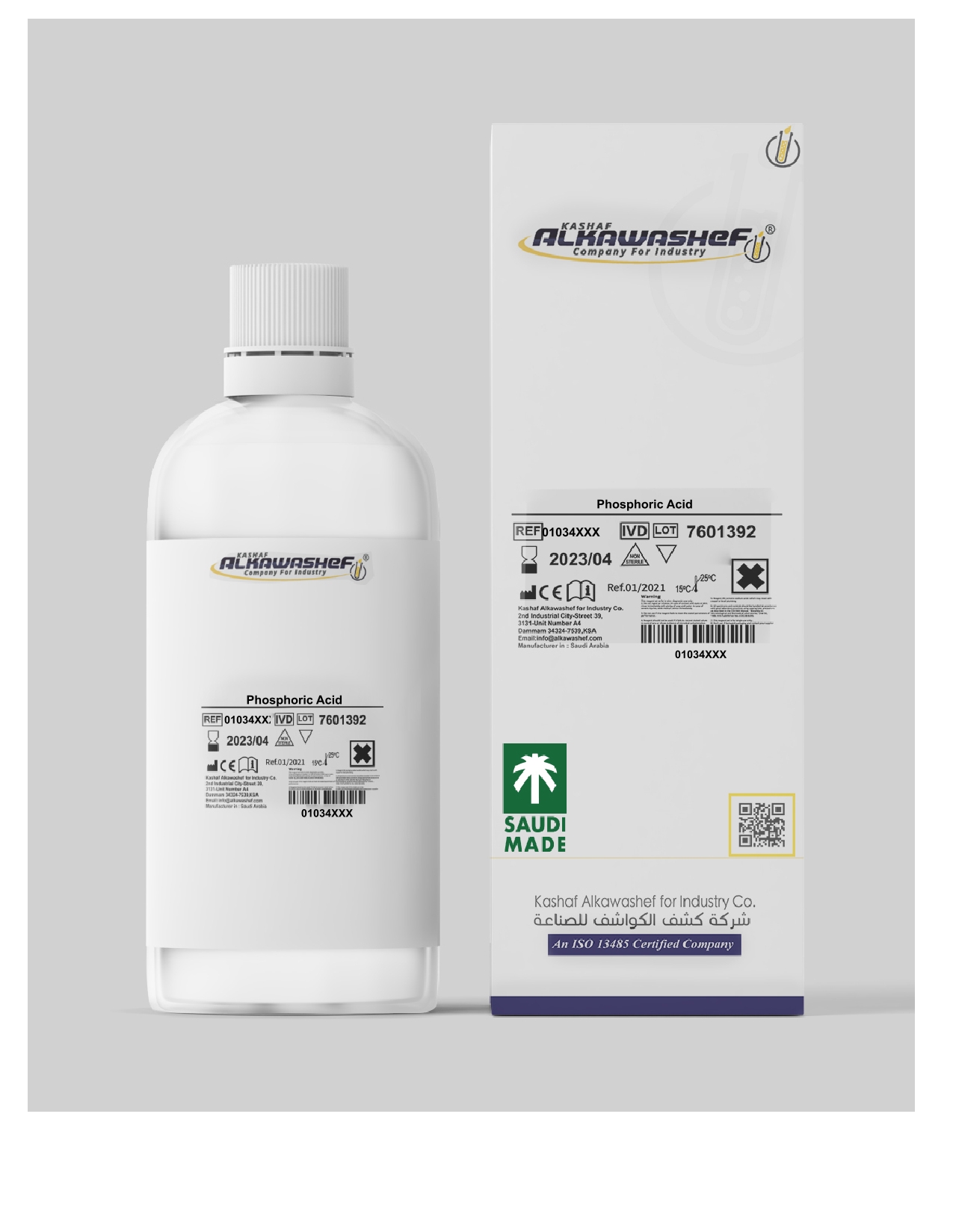
Phosphoric Acid - Laboratory Applications
Phosphoric acid (85% w/w) delivers controlled acidity supporting diverse laboratory functions including buffering, surface modification, and analytical chemistry procedures.Analytical chemistry laboratories standardize phosphoric acid solutions preparing phosphate buffers spanning pH 2.0-7.2 critical ranges. Tribasic, dibasic, and monobasic combinations provide superior buffering capacity versus acetate systems across enzymatic assays.Pharmaceutical quality control laboratories titrate phosphoric acid content verifying raw material specifications and dissolution media preparation. USP Apparatus 2 methodologies employ pH 6.8 phosphate buffer simulating intestinal absorption characteristics.Metal finishing laboratories utilize phosphoric acid activating steel surfaces prior to powder coating applications. Conversion coating formation inhibits flash rusting while promoting paint adhesion through micaceous iron phosphate crystallite development.Food laboratories employ phosphoric acid acidity correction, sequestrant applications, and beverage carbonation stabilization. GRAS status supports direct food contact while chelation properties prevent metallic aftertaste development.Research laboratories investigate apatite crystal formation, biomaterial surface modification, and hydroxyapatite synthesis. Controlled supersaturation generates biomimetic coatings supporting orthopedic implant integration studies.Storage protocols specify corrosion-resistant containers and secondary containment systems. Vapor corrosion inhibitors protect nearby instrumentation while ventilation systems remove acid mist generated during dispensing procedures.Multiple concentration options accommodate diverse applications from dilute buffering to concentrated surface treatment. Viscosity-stable formulations prevent pipetting errors while maintaining gravimetric accuracy across volumetric applications.ISO 13485 manufacturing verifies phosphoric acid content (titration), heavy metals profile (ICP-MS), and stabilizer absence. Assay certificates confirm food/pharmaceutical grade specifications supporting regulated industry compliance.